October 2012 movies

Here are the movie reviews I wrote for the October issue of EL Magazine, which is being distributed in Tokyo today.

The Bourne Legacy
Tony Gilroy was a very capable scriptwriter before he was a director, and his addition to this lucrative spy franchise makes a neat transition out of the Jason Bourne saga by using the agency freakout occasioned by the previous film’s disclosure of the secret assassin program as an excuse to shut down all its secret programs, one of which involves Adam Cross (Jeremy Renner), another super-agent but one whose powers are fortified by pharmaceuticals. When the CIA terminates his training and, in the process, tries to terminate him, he escapes and locates one of the physicians (Rachel Weisz) who tested him for his reaction to the medication. He needs more of the drug so that he can stay clear of his own hit men. Gilroy expertly weaves the patented Bourne kickass action style into this complex but quite credible story, which moves fluidly from Alaska to suburban Chicago to Manila, and if there seems to be one set piece too many at the end, it’s probably because it relies too much on motor vehicles. Doesn’t Gilroy know that stuff goes in the middle? (photo: Universal Studios) Continue reading

Posted in Movies | Tagged , , , , , , , , , , , , , , , , | Leave a comment

Media Mix, Sept. 23, 2012

Here’s this week’s Media Mix, which is about an NHK special that investigated where the funds approved for reconstruction of the Tohoku region are being spent. The idea that about a fourth of the ¥9 trillion given out so far has gone to projects that have at best a glancing relationship to the plight of people affected by the disaster of March 2011 certainly rankles, but NHK didn’t really analyze how this misdirection of funds was allowed to happen. Obviously, there are time constraints when a TV program is only an hour long, though the last ten minutes or so was dedicated to expense-padding on the part of some sub-contractors hired to carry out cleanup, which, given the gist of the report, seemed a bit off-topic. That isn’t to say it wasn’t a good or worthy subject for coverage. If anything, it probably deserves its own special, as does the whole appropriations system that made it possible for government organs to use this money for purposes other than those for which it was approved. NHK doesn’t say so clearly, but the impression I got from the special is that the whole funding approval process, carried out in three phases through three separate supplementary budgets in 2011, was carried out prematurely in an effort by politicians to show the electorate that the Diet was actually doing something about reconstruction. There didn’t seem to be any specific ideas about how the money would be spent, so when it was made available and the various ministries and agencies submitted their respective proposals there were no prearranged guidelines to follow. It was the classic situation of placing a jar of open sugar on the window sill and letting the ants swarm. Bureaucrats are really good at swarming, as evidenced by one segment of the report that showed how much money each ministry took away from the reconstruction budget: the portions were almost identical to what they are with normal budgets, meaning it’s business as usual. In that regard, the misappropriation angle could be used to explain a lot of problems related to how the bureaucracy operates outside public scrutiny. These are not new concerns and the citizenry is hip to bureaucratic opportunism and cynicism, which is mainly responsible for Japan’s towering government debt. That, of course, is a topic the media should be pursuing every day with all the resources at their disposal, but as with a lot of big issues, they can’t see the forest for the trees (amakudari, the occasional white elephant project).

Posted in Media | Tagged , , , | Leave a comment

Media Mix, Sept. 16, 2012

Here’s this week’s Media Mix, which is about the steep increase in the dispensing of psychoactive drugs in Japan. One of the more puzzling aspects of this issue is how far behind the curve government regulation is. Japan has a reputation for taking a long time when approving new drugs, but medications for mental, emotional, and behavioral disabilities are relatively unregulated, seemingly because psychiatry is not a field the government takes very seriously. One professor at a medical school admitted to the Asahi Shimbun that most Japanese physicians who go into psychiatry–and the number is on the rise–lack the proper training for diagnosis, and thus can be swayed more easily by pharmaceutical company salespeople. And because psychiatry is a young discipline in Japan, the latest trends tend to be stressed, such as drug treatments, which are basically “short-term” solutions, meaning they deal with the situation on a day-by-day basis. Psychoanalysis and counseling, on the other hand, address underlying causes, such as trauma and repression. Of course, there are many people with mental illnesses whose problems are deemed organic, and thus require chemical adjustments to help them get through the day. But what many of the older doctors interviewed by the media point out is that the dispensing of drugs has become automatic. Doctors have to monitor their patients’ reactions to these drugs and keep in mind that many are highly addictive. The leader of an organization of families of suicides told the Asahi that his group has lobbied the health ministry to carry out a survey of patients who may have experienced adverse reactions to their medications, but so far the ministry hasn’t. He points out that the government has launched a campaign to encourage people who think they are suffering from depression to seek treatment as early as possible, but at the same time the government does not caution these people with regard to the possible side effects of psychoactive drugs, since that’s usually the treatment they’ll encounter. Continue reading

Posted in Media | Tagged , , , , | 3 Comments

Media Mix, Sept. 9, 2012

Forbidden fruit: peaches from Fukushima

Here’s this week’s Media Mix, which is about “rumor damage” and its effect on sales of produce from Fukushima Prefecture. Much of the contentiousness I refer to near the end originally arose when it was mainly the foreign media who were saying dire things about the possible effects of the Fukushima No. 1 Nuclear Reactor disaster. Charges that outlets like CNN and the New York Times were and still are purposely exaggerating unproven dangers to boost page hits continue to this day in social media. These parties’ complaint is that such coverage causes unneeded fear among Fukushima residents and paranoia throughout Japan, making it difficult for Fukushima producers to make a living. There are two reasons why I’ve found this argument disingenuous. First, I doubt very much that the majority of Fukushima residents pay any attention to CNN (whose credibility problems are of a much different type than what they’re being accused of here) or the New York Times. The vernacular media has pretty much followed the government line on the Fukushima disaster–or at least they did until the nuclear power protests became too big to ignore–so if you’re going to blame anyone for “rumor damage” then it’s the authorities. Second, the idea that the news media should avoid reporting information that may be vital to the decision-making processes of people who live in the area so as not to make those people uneasy contradicts one of the basic uses of journalism, which is to give people information they can use. Those who believe the media conveys such stories purely for self-serving sensationalist reasons would seem to have their own agenda beyond safeguarding the sensitivities of the local population. People on the other side of the debate, those who are against nuclear power and believe Fukushima is a dangerous place to live, have sometimes accused their opponents of sucking up to the “nuclear village,” which is reactionary and simplistic. Nevertheless, the whole argument comes across as something of a propaganda war.

The only thing we do know is that we don’t know everything. The effects of radiation on the human body are still being researched and debated. The layperson can only study all the available materials, listen to both sides, and draw his or her own conclusion. If that person concludes it’s best to not take any chances, that decision should be respected in accordance with the age-old truism “better safe than sorry.” That is basically what the two doctors from the International Physicians for the Prevention of Nuclear War told Tokyo Shimbun. They went to Fukushima and talked to people. Many mothers told them they were anxious because they didn’t believe they were getting enough information about the dangers of radiation. The doctors said these women deserved to receive as much information as possible, implying they were intelligent enough to make sense of that information. They should be treated as adults and not just victims of “rumor damage” by people with a knee-jerk aversion to media culture.

Posted in Media | Tagged , , | Leave a comment

September 2012 albums

Here are the album reviews I wrote for the September issue of EL Magazine, which was distributed in Tokyo last weekend.

Some Nights
-Fun. (Fueled By Ramen/Warner)
Time Capsules II
-Oberhofer (Glassnote/Hostess)
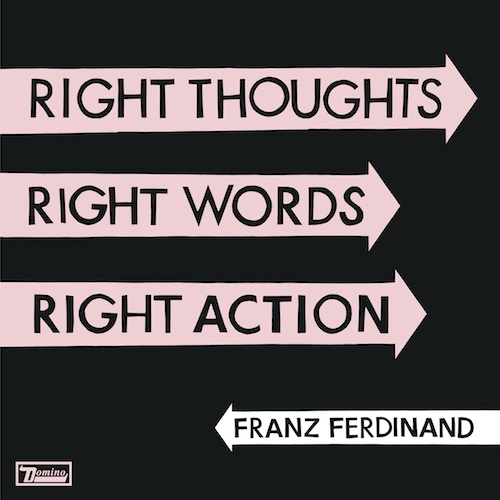
You drop your guard for only a minute and look up to discover that popular music is suddenly overrun with positivity. Is it a compensating reaction to widespread pain and despair or simply another fad? If we take the orchestral pop trio Fun. as the vanguard act in this movement it would seem to be the latter, though there’s no escaping the feeling that lead singer Nate Ruess is sincere on every level. Even the Auto-Tune that dominates the centerpiece statement of purpose, “It Gets Better,” seems totally redundant in trying to brighten up Ruess’s emo-inflected effusions, because by this point we don’t need convincing. The copious Queen analogies that have followed the band since their debut, Aim and Ignite, were proferred because of the aggressive vocal harmonies, but Ruess mainly honors Freddie Mercury by constantly staying on top of the dense, hyperactive arrangements, some of which can be credited to his busy colleagues, guitarist Jack Antonoff and multi-instrumentalist Andrew Dost, but is chiefly the work of producer Jeff Bhasker, who was famous for giving Kanye’s My Beautiful Dark Twisted Fantasy its alluring sheen. For that reason, a lot of people hear hip-hop here, but I don’t, not even on the Janelle Monae joint, “We Are Young.” In any case, Fun. realizes their self-appointed purpose best on grandly imagined rock songs like “Why Am I the One,” which sticks to a normal verse-chorus structure that allows them to wield their most potent weapon: a flair for the climactic melodic hook, like Bread with a taste for bombast. They should leave the complexity to their former fellow travelers in indie-land, like Brad Oberhofer, a nominally bedroom singer-songwriter who is as comfortable with baroque arrangements as he is with frilly pop fluff. For his debut album he snagged Steve Lilywhite as producer, a man who knows his bombast (U2, Rolling Stones), though usually in the service of rock that’s more conventional than Oberhofer’s. First there’s the voice, which, while capable of staying in key, can still elicit derisive grins and even outright giggles. Is he kidding with that posh tone on the merry-go-round-ready “Landline”? Apparently, a lot of people think so, because much of negative criticism the album elicits centers on the singing. I don’t see how you could appreciate Ruess’s exaggerated enunciations and not fall equally for Oberhofer’s nerdy grandiloquence. There’s something unique about the way he wags his tongue in “Away Frm U,” and if Lillywhite seems to pile on the keyboards as a means of counteracting the childish impulses and wayward humor, he underestimates Oberhofer’s confidence, which is earned. Whatever you want to say about his need to be in your face with his style, the guy can write ’em. And while the song subjects don’t necessarily bespeak bliss, they convey Oberhofer’s irrepressible youthfulness with bracing directness. Of course, the young have more of a right to be positive than anyone. It’s just nice to see them admit it. Continue reading

Posted in Music | Tagged , , , , , , , , , , , | Leave a comment

September 2012 movies

Here are the movies I reviewed for the Sept. issue of EL Magazine, which was distributed in Tokyo last weekend.

Carlos
In one of his numerous trite pronouncements, the internationally famous terrorist born Ilich Ramirez Sanchez in Venezuela who later dubbed himself Carlos tells a female interlocutor, “It’s time for action, not words,” which is only partially true. Carlos (Edgar Ramirez) is very definitely a man of action, and in this sprawling, immaculately detailed 5-and-a-half-hour biopic (originally shown on French TV in three parts) those actions are depicted with all the compelling urgency they deserve. But Carlos is also a man of words, of endless bullshit that not only justifies his murderous deeds but helps him seduce everyone, from potential female bedmates to the media. The fact that director Olivier Assayas calls him on this isn’t surprising, though the obsessive nature of the dramatic interrogation can get obvious and redundant. Following an early solo bank bombing for the Palestinian Popular Front, a liberation organization that despised Arafat’s peace overtures, Carlos stands naked in front of a mirror and admires his body. It’s a great moment and one that clarifies Carlos’s agenda for the rest of the movie, but Assayas keeps making the same point. A little while later, he is showing some guns to a female Peruvian student he’s sleeping with. “They’re like an extension of my body.” OK, we get it. Where Carlos justifies its monumental running time is in the set pieces, which recall another breathless movie about terrorists, Battle of Algiers. The suspense is excruciating during the incident that made Carlos a star, when he gunned down three unarmed French policemen and the local PLFP agent who fingered him in a small apartment. The meticulous staging of his first major operation, the kidnapping of OPEC ministers in Vienna on behalf of Saddam Hussein, reveals both the mechanics of the incident and the minute-to-minute compromises that Carlos had to make as the project leader. It was a turning point in international terrorism in more ways than one. Though the world was supposed to see it as yet another blow struck for Palestinian liberation, the real motive was to jack up the price of oil so that Saddam could earn enough money to prosecute a war with Iran. Saddam, of course, was one of the PLFP’s chief sponsors. In the end it all came down to money, and rather than martyr himself for the cause, Carlos bargains for cash and his life—and still gets away with it within the international terrorist community, which is as enamored of his celebrity as the media are. From there it’s all downhill, as Carlos lasts another 20 years, ostensibly in the service of oppressed people all over the world but actually to shore up his own brand. In that regard, as flawed as Carlos sometimes is, it’s a fitting tribute to his legacy and the terrorist mindset. In French, English, Spanish, Arabic and German. (photo: Film en Stock/Canal+/Jean-Claude Moireau) Continue reading

Posted in Movies | Tagged , , , , , , , , , , , , , , , | Leave a comment

Media Mix, Aug. 26, 2012

The little boys understand: The 3 Stooges

Here’s this week’s Media Mix, which is about the Otsu bullying case. The main point of the piece is that above and beyond the whole issue of bullying in school is the issue of violence. What immediately struck me when I heard accounts of the Otsu case from court records is why the students who allegedly were doing the “bullying” weren’t suspended or otherwise punished for subjecting the victim to beatings, even if those beatings had no malicious intent behind them. When I was in school, if a teacher saw such a thing–or for that matter even heard about it–the students involved would be punished regardless of the intent of the violence. Of course, teachers understand how adolescent impulses often manifest themselves, but as long as the adolescents were in school they were the responsibility of the school administration, and such behavior was strictly forbidden. That’s because violence under any circumstances (except, I guess, on the football field) is itself forbidden. For some reason this rule of thumb was not enforced in the Otsu junior high school and, presumably, at many other schools in Japan. Continue reading

Posted in Media | Tagged , , , , , | Leave a comment

Notes on Summer Sonic 2012

What a difference a year makes. As with last year’s Summer Sonic, Tokyo edition, I started the festival Saturday morning with the first act on the Sonic Stage, which this year happened to be Kyary Pamyu Pamyu, the mostly self-invented fashion-idol fixture of Harajuku, whose musical efforts are just one aspect of a personal brand best explained by her first entrepreneurial success, a line of fake eyelashes. It’s pointless to talk about irony because she’s as genuine as marketing gets and fools absolutely no one, including her millions of fans. I’m not going to say a lot of people bought tickets to SS this year, which, again, was said to be sold out, just to see her, but it was really crowded in the dungeon of the Makuhari Messe convention center for an 11:30 show, and the mostly female audience knew the songs and boogied vigorously. As dance-pop goes it was sufficiently entertaining and certainly superior to your average idol-related J-pop. Or, at least, the beats were. Everything else was conventional, from the cartoony backup dancers (all dressed like acid flashback hallucinations of junior high schoolgirls) to the Simon Says choreography and the requisite stage patter. It probably says more about Kyary’s status as a successful businesswoman than about her qualifications as a musician that she didn’t seem to enjoy herself too much, and I’m cool with that. In the space of a year she’s become a superstar performer and announced from the stage that she will be playing the Budokan in November. I assume she’ll have a larger repertoire by then; or, she can simply talk more.

But why was she at Summer Sonic? Ostensibly it’s a rock festival, though in recent years, for reasons lost on no one, it’s become more and more pop-directed. Kyary only played for 30 minutes, so her real purpose at the festival wasn’t to get her fans to show up, but rather to show her stuff to anyone who probably knew about her and was curious to find out more. As I mentioned above, many of the people in the hall obviously were already familiar with her songs, and that says more about cross-platform media exposure than any single appeal she may possess. “Fans” used to be defined by the artists they adored, but the term seems so fluid now. And as a friend pointed out to me the next day, a lot of the young women at the festival were if not Kyary acolytes then at least adherent to the same childish style parameters she champions so effectively, in particular those big false eyelashes, which were ubiquitous. Continue reading

Posted in Music | Tagged , , , , , , , , , , , , | Leave a comment

Media Mix, Aug. 19, 2012

The Senkakus

Here’s this week’s Media Mix, which is about Japan’s territorial disputes with two of its neighbors, South Korea and China. Both conflicts are in flux as I write this and much of what I said in the article already feels dated even if nothing substantial has changed. Given the economic interdependence among the three countries, no one expects these eruptions of patriotic will to escalate into actual sanctions or military action, but they definitely bring out the worst in everyone involved and simply delay whatever constructive engagement might bring progress to eastern Asia. In the context of these island disputes, progress is only measured parochially: I’ll get mine and won’t give an inch. Such a rationale is China’s normal operating procedure, but Japan and South Korea should have, by now, gotten over their mutual enmity. Takeshima/Dokdo may be prime fishing grounds but the strategic importance of those rocks hardly seems worth the emotional capital that both governments are spending on it. Japan’s gambit of taking the matter to the International Court of Justice could be a bluff (Japan knows SK will never agree to a trial there), but in any case Korea’s reason for rejecting the proposal–that it already has sovereignty over the islands and therefore there is nothing to argue–is exactly the same reasoning Japan falls back on in its dispute with China/Taiwan since Japan effectively controls the Senkakus the way Korea controls Dokdo. And as Narahiko Toyoshita has pointed out, in the case of the Senkakus Japan has the U.S. to back it up, even if the U.S. has pointedly said it is not involved in the matter and doesn’t want to be. The American military retains nominal control over two of the islands–technically no one is allowed to land on them without permission from the U.S. Navy–even if it has barely exercised that control since it handed Okinawa back to Japan in 1972. (On a side note, this morning’s Tokyo Shimbun has an article that says in 1952 Japan offered the U.S. the use of Takeshima for training.) Tokyo Governor Shintaro Ishihara has led the movement to buy the other three islands from its owners in order to solidify Japan’s claim on them, though Toyoshita says his real purpose is to provoke China as a means of providing Japan’s self-defense forces with a real reason for existing. In that regard, Ishihara may think that the U.S. will eventually publicly support Japan’s claim. (Toyoshita also says that Ishihara’s strategy is to justify Japanese development of its own nuclear arsenal) This seems totally hypothetical, but it’s interesting, and brings up another, not completely unrelated issue. Continue reading

Posted in Media | Tagged , , , | Leave a comment

Media Mix, Aug. 12, 2012

Hans Asperger, 1940

Here’s this week’s Media Mix, which is about a recent trial in Osaka that ended with a man diagnosed with Asperger syndrome being sentenced to the maximum 20 years in prison for killing his sister. Though I touched on the idea that people who have AS are capable of functioning “normally” in society, I didn’t talk about the way some AS individuals have been covered in the media for their so-called savant tendencies. This aspect of the condition could be considered as limiting as the idea that AS individuals are social incompetents, since AS covers such a broad spectrum of behaviors. Coincidentally, the same week that the ruling was handed down in Osaka, Aera ran two stories about “high-functioning ” AS individuals. One of them mentions that the University of Tokyo “supports” such students, who are very good at “studying” but sometimes have difficulties carrying out research, which requires more of a social component. In fact, some of the university’s students were actually diagnosed with AS while they were attending. They find they are having difficulty “adjusting to school life” and seek help at the student health center, where tests are carried out. According to one expert, AS individuals excel at academic pursuits “but can’t read between the lines” when interacting with other students and faculty. They also tend to be poor at managing their time and find it hard to “be flexible” in their daily routines. This latter situation seems to be the most common difficulty for AS people, who tend to like routine. The other Aera article profiles a couple with AS. Both are successfully employed and have published books about their relationship. He doesn’t understand the concept of nuance, which means she has to be very careful what she says to him lest he take everything she says literally. For instance, during an argument she may, as any wife would, give in and just say, “OK, do what you want.” Then he will do exactly that. He once went out and bought a car on a whim, because that’s what he wanted to do at that moment. As for the wife, she finds it difficult to interact with anyone other than her husband, and in a sense they complete each other. He’s invariably positive but forgetful. She’s wary of the larger world but focused on getting things done. Actually, that sounds like a lot of marriages I know, including my own.

Posted in Media | Tagged , | Leave a comment