December 2012 movies

Here are the movie reviews I wrote for the Dec. issue of EL Magazine, which was distributed in Tokyo last weekend.

Ai no yukue
The “tentatively” titled Where Does Love Go? is extrapolated from a story that Japanese viewers will remember from headline news earlier this year. Others will pick up the meaning without the associated real-life significance, but in some ways the movie may work better for them. Filmed in dimly lit black-and-white, the movie takes place in a shabby Tokyo apartment inhabited by a middle aged couple. She works and he spends all day indoors. We pass one evening with them as she cooks curry and they talk about their life together. Director Bunyo Kimura, working from a screenplay he wrote with Asako Maekawa, who plays the woman, is careful not to overplay the drama. These two are resigned to ending their affair, and the tone of the conversation, not to mention the body language, conveys weariness: While they love each other it would be best to just get it over with. When he does finally leave the apartment and walks into the harsh light of day, it’s as if he were entering a different world. In Japanese. (photo: Team Judas) Continue reading

Posted in Movies | Tagged , , , , , , , , | Leave a comment

Media Mix, Nov. 25, 2012

Here’s this week’s Media Mix, which is mostly about an installment of NHK’s “Closeup Gendai” that covered working women in Japan. Though the issue deserves the attention it’s been getting, the point of the column, and to a lesser extent the point of the program, is that the concept of work as it relates to men as well as women has to change. The model of there being one, almost always male bread-winner in a family isn’t merely outdated and sexist, it’s inefficient and unnecessary. Many of the fixtures of the alternative work environments mentioned on the show were presented as being somehow revolutionary, though in my mind they were atarimae (common sense). The problem with adopting them is that they are all associated with the term “part-time,” which has a negative connotation in that people automatically assume it indicates a less serious approach to work and career. But that image mainly comes from the notion that part-timers make less money and aren’t considered regular employees of a company. The reason the program focused on the Netherlands is because, though the population is much smaller than Japan’s, 15-20 years ago it was in the same situation, with a spiraling national debt and a female population that was underused in the workforce. The country has since expanded working opportunities for women, but the most startling statistic offered in the sequence is that 40 percent of Dutch women in management positions are part-timers. One of the commentators, Taro Miyamoto, a well-known socialist professor from Hokkaido, said that this was the key to the Netherlands’ success, and all it would take for Japan to benefit from the example is to change the population’s mindset, especially that of men. In other words, while the media tends to characterize the barrier to women’s greater participation in the business world as being a male resistance to having them abandon their traditional roles as homemakers and stay-at-home mothers, it has more to do with a misplaced sense of pride. Men have to give up the idea that they should dedicate as many of their waking hours as necessary to their jobs. They have to let go of the prejudice that working 30 hours a week is somehow demeaning compared to working 40 or more hours a week. He said that companies should adopt a wage-based rather than a salary-based system of pay, but make the wage equivalent to what the worker would earn as a salaried employee on an hour-to-hour basis, while providing the same benefits as they would to a regular salaried employee. The current system breeds discrimination, since it tends to value regular salaried workers over contract workers even when the work descriptions and workloads are the same. Right now the government is trying to alleviate this discrimination by forcing companies to hire contract workers on a full-time regular basis after they’ve been working there for a certain period of time, but Miyamoto is saying that companies should be encouraged to go in the opposite direction. They should change all employees, regular and contract, to part-time wage earners with regular benefits. That way they can institute flex-time and hire more people. This is the kernel of the work-share idea that has been debated for years now, usually as a solution to the unemployment problem, but it has generally been dismissed because of the belief that people will earn less. The upshot in the Netherlands is that while the combined pay of husbands and wives under this system is 25 percent less that it would be if both spouses were working full-time, it is considerably higher than it was when men were the sole bread-winners, and, at any rate, the couple interviewed said they were “happier.” After all, they both have much more free time, not only to raise their children, but to spend with each other. What’s not to like about such a system?

Posted in Media | Tagged , , , , | Leave a comment

Media Mix, Nov. 18, 2012

Here’s this week’s Media Mix about Education Minister Makiko Tanaka’s decision to approve three applications for university status after originally rejecting them. In the column I didn’t talk much about Tanaka’s political reasons for either the initial rejection or for changing her mind, only that she received a lot of pressure to do the latter. The latest issue of Shincho reports that she may have been thinking of the upcoming election, which at the time wasn’t set yet but was certainly something she had to think about. Regardless of whether her initial decision to deny these three school certification as 4-year universities was suggested by her subordinates at the education ministry, as Aera hypothesized, there was probably still an element of spontaneity in her action, since that’s part of her working style. But as Shincho itself hypothesizes her reelection is not a done deal. The LDP is backing Tadayoshi Nagashima, the popular former mayor of Yamakoshi-mura, for the constituent seat that Tanaka currently occupies and Shincho thinks he has a good chance of winning. Though supported by the ruling DPJ, Tanaka is nominally an independent, and Nagashima, who won his own Diet seat last time as a proportional candidate, may have more immediate support in the contested Niigata representational district since the locals seem to be drifting back to the LDP, which Makiko’s father, Kakuei Tanaka, once headed as a kingpin. Tanaka might have thought that sparking controversy as an anti-bureaucracy maverick would stimulate her base again and help her win.

Nevertheless, her ostensible reasoning for rejecting the schools doesn’t seem to have been a particularly deep one. She must have known that the three institutions would put up a fight, since their applications were already rubber stamped by the advisory panel, which is made up of current and former members of the “education industry” I mentioned in the column. It’s also possible she knew, at least in the back of her mind, that she would eventually reverse her decision. In that regard, the initial media interpretation of her actions, that she was just showboating again, wasn’t far from the mark, and people who have since criticized her for the eventual about-face may be missing the point. Some have interpreted her rejection of the three schools as a rejection of education policies in general. There is little evidence that that was the case. She simply wanted to point out that the process of approving new universities was not effective since the panel approved everything. On the NHK radio discussion I mentioned, someone said that Tanaka probably knew her decision wouldn’t make a difference in the short run, but that it would at least draw attention to the problem. That problem, however, is mostly financial. The bigger problem of Japan’s education policy — about whether or not young people are benefiting from school as it’s now structured — was not her concern. And while she did change her mind, she doesn’t seem repentant. Tanaka said something about how the three schools should be able to derive some “good PR” from the controversy and recruit more students than they would have without the publicity, and who knows? Maybe they’re happier than they would have been had they just been automatically approved.

Posted in Media | Tagged , , , , | 7 Comments

Media Mix, Nov. 4, 2012

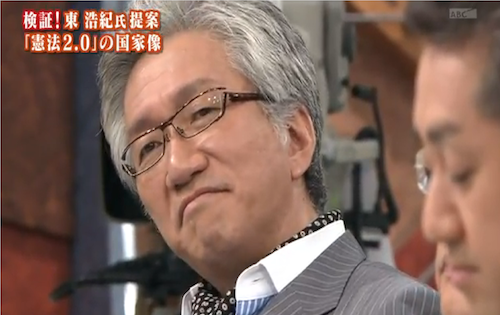
Here’s this week’s Media Mix, which is about the media response to Shintaro Ishihara’s resignation as governor of Tokyo. It’s interesting and fortunate that Eriko Arita’s article about the rise of online nationalism appears on the same page. I didn’t get into Ishihara’s right-wing tendencies since they’ve already been discussed widely, especially in the English-language press, and I mainly wanted to focus on his impulsiveness as a public figure and how the media doesn’t call him enough on it. Still, Arita’s piece complements the column well in that it provides some context for Ishihara’s own “reckless” brand of nationalism, to borrow an adjective from Makiko Tanaka. Coincidentally or not, there’s a similar article in the new issue of Aera about uyoku, or “right-wingers,” that also discusses at length the rise of online nationalism, which has its own nickname: nettou, combining the katakana abbreviation of “internet” (netto) with the first syllable of the word “uyoku.” As Arita points out, most of the members of Zaitokukai, an organization opposed to any special rights for foreigners, are “regular members of society,” meaning they aren’t dyed-in-the-wool idealogues like people who normally wear the uyoku label. And while some nettou may show up for the occasional public demonstration, like the people who targeted Fuji TV over its reliance on Korean dramas or the recent rally in Uguisudani where there were calls to deport all Korean nationals, the vast majority hide behind web anonymity. This distinction is the theme of the Aera article, which claims that nettou are “light on ideology,” thus making them quite different from “real right-wingers.” In fact, a real right-winger comments in the article that one of the reasons for the rise of nettou, which he regrets, is the lack of a viable left-wing. For all intents and purposes there is no liberal faction in the government as the term is understood in the West. Left wing ideals are championed by the Japan Communist Party and the Social Democratic Party, neither of which wields any sort of decisive power. Any power they have is symbolic. Some people have said the problem is simply one of nomenclature. Both parties might attract more interest if they just changed their names, since “socialist” and “communist” just carry too much baggage. But the problem is deeper, and one that exists in the U.S., too, where liberalism has a tradition but isn’t what it used to be. This week’s presidential election may seem to be a battle between a liberal and a conservative, but in terms of real policy, both candidates seem likely to temper whatever “extreme” positions they advocate once they are in office. If conservatives seem to rule it’s mainly because they are louder and liberals, true liberals, are too self-conscious about “ethics” to formulate an effective counter-attack. This situation is even more obvious in Japan; so much so that the right-winger interviewed in Aera says that he has nothing to fight against. In fact, in their rhetoric, the true right wing has to “compensate” for the lack of a true left wing (sayoku). Nettou developed in this vacuum, though it should also be pointed out that in Japan left wing elements, especially those associated with the student movement of the 1960s and 70s, are often indistinguishable from right wing elements in terms of tactics. That’s one reason why the JCP, regardless of its sensible liberal agenda, will never be a potent opposition party. People look at that name and all they can think about is crazed reds killing one another through internecine “purges.” Even Ishihara never went to those kinds of extremes.

Posted in Media | Tagged , , , | Leave a comment

November 2012 albums

Here are the album reviews I wrote for the November issue of EL Magazine, which was distributed in Tokyo a week ago.

The Truth About Love
-P!nk (RCA/Sony)
Kiss
-Carly Rae Jepsen (Interscope/Universal)
For all her self-professed independence, Alecia Moore thrives on collaboration, which just goes to show that some of the things you learn as a teen idol are valuable. Though she’s acted her age ever since Missundaztood gave the world Linda Perry as super-producer, her reliance on co-writers and song doctors has always been attentive to the point of co-dependence. The Truth About Love delivers on its promise of maturity even before it lands in your CD changer, arriving as it does with a back story any former idol would kill for: P!nk’s reconciliation with her husband, Carey Hart (whose estrangement was chronicled on her last record), and the birth of their baby. But don’t look for particulars of these private matters in the songs, which benefit less from any attendant emotional insight than from the chaotic feelings that such a roller coaster life is bound to deliver. The opening party anthem “Are We All We Are” trains a magnifying glass on the Ke$ha credo while exhorting the club kids to do a little better with their respective futures, while the single “Blow Me (One Last Kiss)” keeps its options open even as it rejects the unsatisfying lover. Gambits as slick and catchy as these are standard issue for big label pop albums as well-financed as P!nk’s, but rarely do big label pop albums even better financed than this one keep getting better as this one does, from the heartbreaking melodrama of “Try” to the piercing duets with Nate Ruess and Lilly Rose Cooper (nee Allen) and the absolutely hilarious—and non-accusatory—”Slut Like You.” I count 21 collaborators here, with a few, like Greg Kurstin and Billy Mann, making repeat performances. Each one has something specific to add to P!nk’s musical sensibility and always to its benefit. I don’t know if the girl really knows the truth about love, but she really knows how to make a fine pop record. Carly Rae Jepsen is still too green to merit as much credit for the success of her second album, Kiss, even if at 27 she’s six years older than P!nk was when she made Missundaztood. Still under the thumb of that Bieber manager munchkin she has yet to assert any personality that doesn’t fit snugly into the dance-pop compositions designed for her. It’s impossible to identify anything that Jepsen brings to the sickly addictive hit “Call Me Maybe” that makes it hers except maybe the willingness to give herself over completely to the song’s obvious charms, which are micro-managed down to the Auto-tuned lilt on her vocals at the end of each phrase. There are just as many collaborators here as on the P!nk album though you wouldn’t know it. Even the duet with Owl City sounds as if it’s been filtered through a gate-keeping synthesizer, but then so do all his songs. State of the art? The idol-making machine sure has gotten economical since P!nk was an ingenue. Continue reading

Posted in Music | Tagged , , , , , , , , , , , , , , | Leave a comment

Media Mix, Oct. 28, 2012

Shinichi Sano

Here’s this week’s Media Mix, which discusses that controversial Shukan Asahi article about Osaka Mayor Toru Hashimoto. As mentioned in the column, the different name for the mayor used in the title of the article, “Hashishita,” is an alternate reading of the kanji that form “Hashimoto.” Nowhere in the article, however, does the author, Shinichi Sano, mention his reason for using this alternate reading, which only appears in the title. Of course, if any Japanese person who didn’t know Hashimoto just saw his name printed they would undoubtedly pronounce it as “hashishita,” but some commentators have said that Sano’s use of the alternate reading has a loaded meaning. “Hashishita” literally means “under the bridge,” which is where many homeless people live, thus subtly reinforcing the notion that Hashimoto’s background was impoverished. It could also be an allusion to the famous novel by Sue Sumii, Hashi no Nai Kawa (The River Without a Bridge), which is about burakumin, the untouchable caste. Two people in the article suggest that Hashimoto’s father belonged to this caste. Continue reading

Posted in Media | Tagged , , | Leave a comment

November 2012 movies

Here are the movie reviews I wrote for the November issue of EL Magazine, which was distributed in Tokyo last Thursday.

Abraham Lincoln: Vampire Hunter
Though clearly a stupid movie, this adaptation locates the exploitative kernel of Seth Grahame-Smith’s novel and brings it valiantly to the fore. Director Timur Bakmambetov, responsible for the super-manic Night Watch vampire series, keeps the straightest face imaginable as he presents the sixteenth president of the United States as a man whose dedication to making the union both freer and stronger was more hands-on than previously thought. Grahame-Smith, who also wrote the screenplay, posits Honest Abe’s motivations as springing from the trauma of his mother’s death at the hands of bloodsuckers, an event that thrusts him into the path of Henry (Dominic Cooper), who trains him in the art of vampire slaughter. Wielding a silver-edged axe like a baton and busting fung fu moves that should make Jet Li thankful he’s retired, Lincoln (Benjamin Walker) pledges his life to ridding the country once and for all of vampires, who happen to run things. The best joke is that slavery was perpetrated by vampires, who became plantation owners not so much to build a mercantile empire—though there’s that, too—but to guarantee a permanent supply of food for themselves. The Civil War and the freeing of the slaves was thus Lincoln’s main gambit for destroying their evil league. Personally, I have no problem equating slaveowners with monsters, but the movie only takes the analogy to the level it needs, and half of the running time is occupied by gruesome one-on-ones whose only coherence with the over-arching Lincoln narrative is their imaginative use of 19th century paraphernalia (Lincoln’s axe doubles as a shotgun). And because Lincoln does all this evil cleansing out of the public eye, the movie takes on the cast of just another blockbuster superhero movie. In that (pardon the pun) vein, tertiary characters are utilized without any consideration for history. Mary Todd Lincoln (Mary Elizabeth Winstead) is not the neurotic helpmate but a bitchin’ babe with her own vampire-snuffing skills. Lincoln’s cabinet is made up of old pals who share his secret life, including one African-American whom he treats as a brother. And since every superhero movie has to have an arch-enemy, we get Adam (Rufus Sewell), the king vampire who is presented as the real cause of the Civil War. No one involved in the film demands you take it seriously, but Grahame-Smith can’t be bothered with taking his inventive conceit to its natural conclusion. It’s just an excuse to explore creative means of decapitation. Had it been truly tongue-in-cheek, Abraham Lincoln: Vampire Hunter could have provided the welcome antidote to the solemn hagiography that Steven Spielberg’s upcoming biopic of Lincoln promises to be. What a wasted opportunity. (photo: Twentieth Century Fox) Continue reading

Posted in Movies | Tagged , , , , , , , , , , | Leave a comment

Media Mix, Oct. 21, 2012

Here’s this week’s Media Mix, which is about an ongoing scandal involving singer Sachiko Kobayashi. In the column, I refer to Kobayashi as “the queen of enka,” though that label tends to be thrown around a lot in the show biz press and is used to describe half a dozen other female entertainers. Kobayashi is a lesser light in the enka world in terms of talent–not for nothing does she invest so much in costumes. Until she got married, she was a real success as a brand, which matters much more than singing ability. The column might be misleading by giving the impression that Kobayashi is something of a rebel by having quit her production company in 1987, but that’s a fairly common route for enka singers who truly make their calling into a lifelong career. The style itself is characterized by suffering and overcoming (or not overcoming) great difficulties, so the whole idea of paying penance for quitting a talent agency and then spending years in the wilderness building up one’s reputation from zero fits the enka image quite well. As with so many creative endeavors in Japan, apprenticeship is central to the business of enka. Traditionally, singers became attached to established songwriters at a very early age, and if they were females there were the inevitable rumors about love affairs, even if the apprentice was a teenager. The vocal skills needed to sing enka properly are formidable, and it can take years to master them. Nevertheless, it is the material that determines success, so young enka singers tended to be identified with their mentors, who wrote their songs–or, at least, their lyrics, since, like the blues, the musical patterns associated with enka are limited. After a certain number of years in the limelight, the singer may then decide to quit whatever talent agency he or she is signed to and go solo, at which point the real hardship begins. In the enka world, concerts are called “eigyo” (sales activities), because that’s what they are. Though top enka singers occasionally land singles on the pop charts, very few make any kind of living on recordings. It’s all made through concert appearances in small towns where people pay good money for a show that usually includes several support singers as well as lots of funny banter and dramatic sketches; and, of course, many costume changes, props, and a full complement of live musicians, all of which cost money, which is why enka concerts tend to be more expensive than the average pop show. As mentioned at the end of the column, enka is dying as a popular art form as the country ages because older fans aren’t being replaced by younger ones. Kobayashi, in a sense, represents a dying breed, and it should be noted that her new single, written by superstar singer-songwriter Masashi Sada, is not enka. Another “queen of enka,” Aki Yashiro, who is, objectively speaking, a much better singer than Kobayashi is and certainly a more successful businesswoman (she followed the usual enka practice of marrying her longtime manager), has just released an album of Western jazz standards sung in both Japanese and English. It’s a one-off, not a career course correction, but it keeps Yashiro relevant commercially.

Posted in Media | Tagged , , , | Leave a comment

Media Mix, Oct. 14, 2012

Shin Suwon and Francis Lim

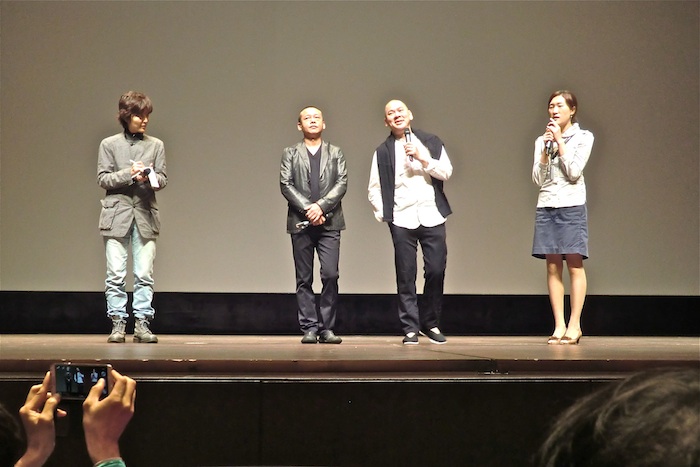
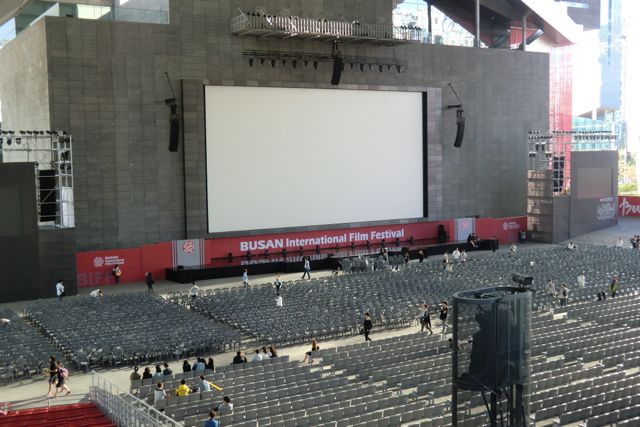
Here’s this week’s Media Mix, which is about the fierce competition in Korean high schools to get into prestigious universities. It was inspired by the movie Pluto, which I saw in its world premiere at the Busan International Film Festival. After the screening a friend introduced me to the director, Shin Suwon. I found her back story completely fascinating and we agreed to have breakfast the next morning with her producer, Francis Lim, and talk about the movie, which is about a relatively poor student named June who gets into an elite high school whose students normally go on to the best universities. Because of his background, his new classmates, in particular a clique of over-achievers, bully him. Though he hates these students June himself is so caught up in the competition to get into Seoul National University that he endeavors to join the clique, which has all sorts of schemes and secret methods for passing tests. Pluto is a thriller structured around the murder of one of the elite students. June is a suspect, and it’s his evolution from a bright and imaginative young man (“Pluto” refers to his theory of why the planet was kicked out of the solar system in 2006, a nifty metaphor for his own situation) to “monster” that constitutes the bulk of the drama. The “torture chamber” refers to the basement of the school where the clique holds their meetings and which is rumored to have been a KCIA interrogation room in the 1980s.

After the jump is a transcript of our conversation. Continue reading

Posted in Media, Movies | Tagged , , , , , | Leave a comment

October 2012 albums

Here are the album reviews I wrote for the October issue of EL Magazine, which was distributed in Tokyo earlier this week.

Channel Orange
-Frank Ocean (Def Jam/Universal)
I Know What Love Isn’t
-Jens Lekman (Secretly Canadian/Hostess)
Do free downloads exacerbate cognitive dissonance or dissipate it? It’s a relevant question when pondering the critical success of Frank Ocean’s debut mixtape, Nostalgia, Ultra, which scored high on many 2011 Top Ten lists, including ours. The fact that you don’t pay for it may color your attitude toward an album, but now we have Ocean’s official major label debut, the most hotly anticipated of the year, and the first reaction is that it’s a lesser work. Ocean’s brand of R&B is hardly original, but it is fresh, owing principally to its auteurist character. He avoids samples, relying heavily on studio musicians, but the menagerie of producers and co-writers aren’t nearly as conspicuous as they are on other R&B records. Though Ocean’s passions are real enough, he rarely translates his raptures into speedier tempos, meatier arrangements, or greater volume. In fact, his already storied gift for melody is a function of his less-is-more approach. The songs are lyrical because Ocean is lyrical. Even his lyrics are lyrical, and while many have focused on his typically R&B-based obsession with the good life and the demimonde, his only subject is love. Even on the delightfully dry and trenchant “Super Rich Kids,” the singer eventually gets around to his main concern. “I’m searching for a real love,” he says with the only true feeling the song contains. And while sex has its place on the album, it tends to be observational rather than participatory. The album’s emotional and musical centerpiece, “Bad Religion,” makes perfect sense of Ocean’s musical lassitude: “This unrequited love to me is nothing but a one-man cult,” the idea of loving someone “who could never love you.” It’s not just what Channel Orange is about. It’s what Frank Ocean is about. It’s also what Swedish singer-songwriter Jens Lekman is about, though he’s usually more cavalier about the ones that get away. The somewhat cynical-sounding title of his third album indicates negative experience in the ways of amour, but it’s always difficult to get worked up over Lekman’s detailed stories of heartbreak and loss since he doesn’t get worked up himself. As a pop songsmith and arranger he hangs loose, recalling the stoned afternoon insouciance of Chris Rea; as a singer he rarely lifts his voice in either ecstasy or enmity. And yet I Know What Love Isn’t, despite its melancholy subject and occasional outbursts of misanthropy, seems designed to raise smiles all around, as if he were trying to lift his own spirits after the breakup that so obviously inspired all ten songs. “Baby what’s wrong?” his lover asks on “Some Dandruff on Your Shoulder,” and he replies, over and over again, “it’s nothing,” as if desperately trying to change his outlook. Championed as a singles mensch, Lekman here seems determined to channel his disappointments into an album-length statement, but some habits are difficult to break. It’s too much fun to take that seriously. Continue reading

Posted in Music | Tagged , , , , , , , , , , , , , | Leave a comment